
|
|
|
| Skip Navigation | ||
|
|
|
 |
|
|
 |

|
|
 |
|
|
|
|
||||||||||||||||||||||||||||||||||||||||||||||||||||||||||||
|
|
Framing the ContextAn education leader learned about equity from her students. Thinking of Each and Every OneIn her own years as a teacher, this national advocate for educational equity learned to consider the needs of each child in her classroom. by Francena Cummings, Eisenhower Consortium for Mathematics and Science at SERVE, Tallahassee, Florida  At the center of the notion of educational equity is the hope that schools can serve as the equalizer for many of our citizens. If we are going to make that happen, we have to create the environment and the conditions so that all children can achieve. That can happen only when students feel good about who they are and when they are given the kinds of tasks and teaching that will allow them to learn. I speak from the perspective of having taught science for many years, mostly in middle school. First and foremost, I knew I had to be prepared to teach the material. If I knew my subject matter, I would be able to prepare the conditions and provide quality tasks for all of my students. Next, I had to think of all the other factors that can affect student learning. I had to think in terms of who the students are and what they bring when they come into that classroom. I constantly reminded myself to think about that classroom full of students as individual learners and to plan instruction that would help each one achieve as much as possible. I never had a preconceived notion about what my students could do. I always tried to accept them--and whatever they brought--and to begin working with them at that level. But no matter how much we try to understand our students as individuals, we have to recognize that we are all a part of the larger society. We teachers are members of our own ethnic or cultural groups, so naturally a diverse classroom is a challenge. Again, I speak from my own experience as a person who was brought up in segregated schools. I had grown up and started teaching in all-black schools. That was my life. When I moved into integrated situations, I did a lot of observing and listening. I learned the truth of the old saying, "you are more alike than you are different." Overcoming Our Own BiasesEven when you believe you are sensitive to the needs of individual students, you may find you have biases that you do not recognize. I came to grips with this during my first experience teaching students who were not fluent in English. The school district where I was working experienced an influx of families from Vietnam. When we first started working with these students, we had the notion that they would be able to learn the material when they could understand the language. Until then their lack of English was going to be a significant barrier. When the Vietnamese students came into my classroom, I put them in groups with other students who would be helpful. I encouraged students to facilitate the lessons for the newcomers. I felt I had handled things well. Then one day, I noticed that one Vietnamese student continued to watch what I was doing with the other groups, even though I had given him another task. Finally he began to tug at my jacket to tell me "I can do it!" It was a telling moment when I realized I had underestimated that student. As a result, I began to look beyond English proficiency. I recognized that the newly arrived students could build on what they brought from their native land long before they learned to speak English. I also learned to look carefully at my own preconceptions and how they might prevent me from recognizing the strengths of each individual. Each of us have our own biases that we must acknowledge and address. For many people, gender bias is so unconscious that we might not recognize it. As much as we want to think that we would not promote males over females, we need to ask questions as basic as, "Do I actually call on the boys more than I do the girls?" We have to be mindful of ways we can encourage both boys and girls, especially in math and science. Making the Classroom a HomeOne of the best ways we can serve each individual is by making our classrooms loving, homelike places. The students can help us accomplish this. As a teacher, I always spent a significant amount of time in the early part of the year developing that feeling. Students need help in understanding the whole notion of self-respect, which leads to respect for each other as people and finally respect for each other as learners. It is important for students themselves to acknowledge that some of them are going to learn more quickly than others, but that does not mean that we do not honor a student who may have a different learning style. The whole class can work together to respect each person and help provide whatever it takes to get him or her where he or she needs to go. Reaching Beyond the ClassroomMaking everyone in the class comfortable is a big responsibility that I think is still left to the individual teacher. However, it is important for the administration to assist in that effort. We as teachers get our cues from our leaders. Administrators need to show that they value teachers, especially where there have been gaps in achievement levels. Teachers can try to do it on their own, but it is so empowering to know that their school is about achievement, and it is not just about achievement for a few-it is about achievement for all. Administrators' support is very important in relationships with parents. Sometimes parents question unfamiliar teaching styles; some parents don't buy into cooperative learning, for example. Teachers need the administrator to say, "You know, in this school, we support that kind of climate because we believe it is very rewarding for our students." I believe all parents like to perceive their school as high achieving. They want to feel that their schools are doing the best for their children. Of course, their own children are parents' first concern, but many parents realize that the school that is not working for the majority of the students is not going to be the best place for their own child. Making Progress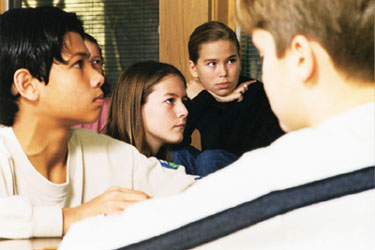 The challenges of making schools work for every child are great, but I believe we are doing a better job. We have improved our ability to serve students with learning disabilities or physical or emotional handicaps in the regular classroom setting, and those students have benefited greatly. When it comes to achievement differences between white children and children of color, we still have gaps, but we have made progress there as well. Recent discussions on the achievement of minority students emphasize the complexity of this issue, but somehow it always seems to come back to expectations. Do we really believe that all children can learn? If we believe that all children can learn, how do we--not just teachers but all other members of the education community--act on that belief? For example, school boards set policy about class size, school improvement processes, and resource allocation. If schools are to work for every child, the entire system must be accountable. We educators must continue to develop our skills in serving all students, regardless of background. We must strive to understand the various cultural influences that come into our schools. We have to think about ways to interact with those cultures, learn from them, and make them a part of the learning situation for all our students. We have to beware of looking at this whole notion of equity from the perspective of access. Making schools work for every child is more than just putting a student in a satisfactory situation. We have to put the policies and practices in place to facilitate that child's learning. Most of all, for many of our disadvantaged children, somehow we have to show them that there is a payoff, that school achievement is going to make a difference--to get them that job, to start them on their way to being productive citizens, and ultimately to help them understand their world. For that to happen, educational equity must be reflected throughout our society.  Francena Cummings is Director of the Eisenhower Consortium for Mathematics and Science at SERVE. She was a teacher in the Montgomery County Public Schools, Maryland, where she also served as teacher specialist and staff developer in the district's Department of Quality Integrated Education Program. Visit www.serve.org/Eisenhower or call toll-free |
||||||||||||||||||||||||||||||||||||||||||||||||||||||||||||
|
|
|
| Back to Top | ||















